Anime Ancient Ruins Background VOL 46: A Designer's Deep Dive
Every creative project needs a foundation, a starting point that sets the entire tone. For those of us working in digital illustration, game design, or immersive storytelling, that foundation is often the environment we build. The right background isn't just filler; it's the silent narrator of your scene. This is precisely where the Anime Ancient Ruins Background VOL 46 from Creative Fabrica enters the conversation, offering a powerful and evocative starting point for a wide array of creative endeavors.
I recently had the chance to integrate this asset into a concept project, and the experience was a masterclass in how a single, high-quality design asset can elevate an entire workflow. It’s more than just a pretty picture of crumbling stones. It’s a meticulously crafted world, brimming with a specific personality that can profoundly influence the direction of your work. Let's break down what makes this particular illustration a valuable tool for designers, marketers, and content creators alike.
The Visual Personality: More Than Just Ruins
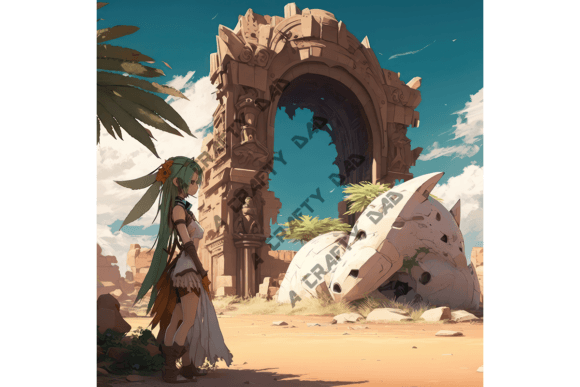
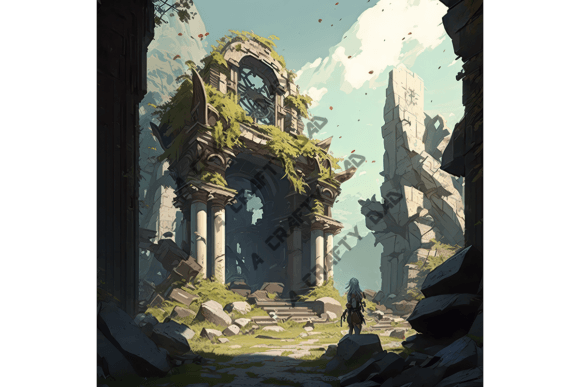
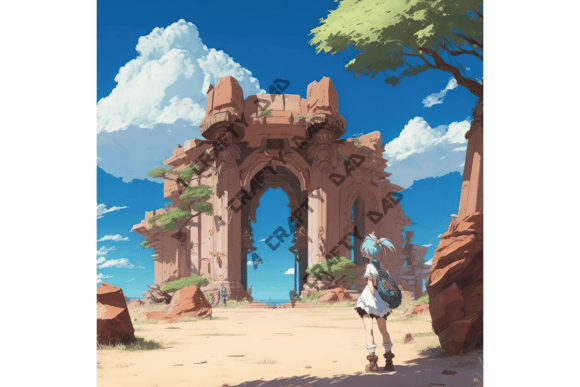
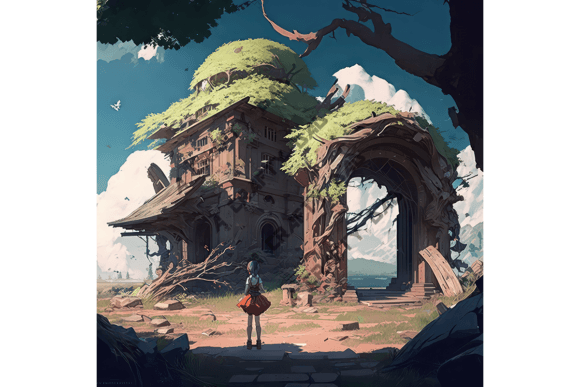
At its core, the Anime Ancient Ruins Background VOL 46 presents a classic trope: a forgotten temple or city reclaimed by nature. However, its execution is anything but generic. The artist has infused the scene with a distinct anime sensibility that balances realism with stylized beauty. The linework is crisp, defining the weathered texture of stone blocks and the intricate carvings that hint at a lost civilization. Yet, the color palette and lighting feel soft and almost ethereal, with dappled sunlight filtering through a dense canopy of foliage.
This blend creates a unique emotional tone. It’s not a desolate, post-apocalyptic ruin. Instead, it feels mysterious, serene, and full of untold stories. You can almost hear the gentle rustle of leaves and the distant sound of water. This personality is its greatest strength. It’s a background that invites the viewer to imagine the history of the place and the characters who might inhabit it. It’s a perfect stage for a lone adventurer, a team of explorers, or a quiet moment of reflection for a protagonist.
Where This Asset Truly Shines
Understanding the asset's personality is key to knowing where it will be most effective. Its blend of detail and atmosphere makes it incredibly versatile. For game developers, it’s an ideal background for visual novels, point-and-click adventures, or even as a concept art base for 3D environment modeling. The high-resolution (300 DPI) files ensure that details remain sharp even when zoomed in, which is crucial for immersive player experiences.
Beyond gaming, consider its applications in:
- Digital and Print Publishing: Perfect for book covers in the fantasy, young adult, or sci-fi genres. It provides an immediate sense of scale and adventure. It could also be used as a full-page or chapter-heading illustration within a book or magazine.
- Web and App Design: A compelling hero image for a blog about history, mythology, or travel. It could also serve as an atmospheric background for a landing page promoting a creative product or service, immediately establishing a sense of quality and imagination.
- Branding and Marketing: For a brand identity centered around exploration, history, or storytelling, this illustration can be a cornerstone of the visual language. Use it in social media graphics, presentation backgrounds, or email newsletters to capture attention and build a cohesive brand world.
- Personal Projects: The applications are just as broad for hobbyists. Think custom stationery, unique phone or desktop wallpapers, or as a backdrop for digital scrapbooking and fan art.
Practical Guidance for Integration
Simply dropping a beautiful background into a project isn't enough. To truly leverage the power of the Anime Ancient Ruins Background VOL 46, you need to integrate it thoughtfully. The first step is always to consider the project's overall goal. Is the background meant to be the main focus, or a supporting element that adds depth?
If it's the star of the show, let it breathe. Minimize overlapping text or graphics to allow the intricate details to be appreciated. If it's a supporting element, you may need to adjust its opacity, apply a slight blur, or use a color overlay to ensure your foreground elements, like typography or a character, remain the focal point. This is where understanding visual hierarchy becomes critical. The background sets the mood, but it shouldn't compete with your call-to-action or primary message.
Evaluating Fit and Ensuring Readability
Not every project is a perfect match, and that’s okay. The key is to evaluate the fit. Ask yourself if the illustration's serene, mysterious tone aligns with your message. A high-energy corporate presentation might clash with its contemplative nature, but a history podcast or a fantasy author's website would be a perfect pairing.
One of the most common challenges with detailed backgrounds is ensuring text readability. Here are a few practical solutions I've found effective:
- Use a Semi-Transparent Overlay: Place a solid-colored shape (like a dark grey or a color pulled from the illustration) over the area where your text will go, and reduce its opacity. This creates a "safe zone" for your typography without completely obscuring the background.
- Choose Your Font Wisely: Pair the background with a clean, sans-serif font for body text. Its simplicity will contrast well with the background's complexity. For headlines, a bold serif font or even a stylized display font can work, but ensure it has strong letterforms that won't get lost.
- Leverage Negative Space: Look for areas within the illustration that are less busy, like patches of sky or dense shadow. Placing your most important text in these areas will dramatically improve its legibility.
Ultimately, the Anime Ancient Ruins Background VOL 46 is more than just one of many available design assets. It's a catalyst for creativity. It provides a rich, detailed, and emotionally resonant foundation that saves countless hours of work while offering a level of quality that can elevate any project it touches. By thoughtfully integrating it, you can build more immersive worlds, tell more compelling stories, and create more engaging content for your audience.